Diversity is a new buzzword in Pittsburgh. And its 90 neighborhoods are often the city’s claim to it — that they are strong and diverse and together create a welcoming, multifaceted city.
But how diverse is Pittsburgh, really, if we look at it on the neighborhood level?
To answer that question, we used the USA Today Diversity Index and then we — equipped with notebooks and smartphones — went to some neighborhoods to check whether those data points matched perceptions of residents. We asked people what diversity means to them, how diverse and economically stable their neighborhood is and how it has changed over the years.
You can check your own perceptions against data for the neighborhood you live in and find out how racially diverse your neighborhood is and which Pittsburgh neighborhoods are more segregated.
The Index measures the chance that two random people from a neighborhood would be from different races. When a neighborhood has a higher diversity score, there is more diversity in that area and the lower the score means less diversity.
For instance, Shadyside has a diversity score of 50. That means if we picked two random people from Shadyside, there is a 50 percent chance that they would be of different races.
But, we’re not Los Angeles or New York City when it comes to diversity. So when you’re looking at the map, the diversity you see is relative to other Pittsburgh neighborhoods, not other cities.
More diverse places like Philadelphia or New York City score around 70 on the diversity scale. Pittsburgh scores 54 and areas like Westmoreland and Butler counties score around 10.
Explore the map by clicking on a specific neighborhood and then check out below what people have to say about living in the most diverse and least diverse neighborhoods of Pittsburgh.*
Most diverse
- 1. Marshall-Shadeland
- 2. Friendship
- 3. Sheraden
- 4. Central North Side
- 5. Spring Garden
- 6. Allegheny Center
- 7. West Oakland
- 8. Knoxville
- 9. East Liberty
- 10. Perry North
Least diverse
- Bon Air
- Regent Square
- Duquesne Heights
- Homewood North
- Lincoln Place
- Bedford Dwellings
- Overlook
- Oakwood
- Homewood South
- Esplen
Marshall-Shadeland
Pittsburgh’s most diverse neighborhood.
Marcie Kemmler, co-owner of Don’s Diner

Marcie is the daughter of the diner’s namesake, who set up shop in Marshall-Shadeland 24 years ago. She lives above the diner with her son, and she can hardly finish a sentence without a neighbor or customer asking her how she’s doing.
It makes observing the diversity of the neighborhood fairly obvious. Friends calling out to her closely reflect the racial makeup of the area (49 percent white, 41 percent black, 5 percent Hispanic and 5 percent multiracial).
The diner’s customer base two decades ago was much whiter than it is today, she said. Nowadays, the family is proud of the diversity — by race, age and sexual orientation — of their customers and how peacefully everyone coexists when taking a stool at the counter.
Marcie sees their family diner as a meeting place for people of different backgrounds.
Kim Morrow, 51, on disability leave

Kim has lived in Marshall-Shadeland all 51 years of her life. That may change soon. The shootings and drug activity in the neighborhood are driving her and her family out.
She said she feels the crime there is disproportionately associated with black people and that there is a palpable tension between the black and white residents of the community.
She said she struggles with how to talk about these issues with her biracial grandchildren. “So we just avoid it.”
Friendship
Pittsburgh’s second most diverse neighborhood.
Laura Knight

Laura Knight has lived in Friendship since June. She moved to Pittsburgh from England with her husband. She said the neighborhood and even their home, which is a shared living space, is fairly diverse. “You get to meet different people who don’t look like you or think like you. You get to swap tips and cooking advice.”
“As far as economic stability, it’s hard to say,” Laura said. “There are a lot of students here. And it seems like the economic status varies house to house.”
Patrick Berry
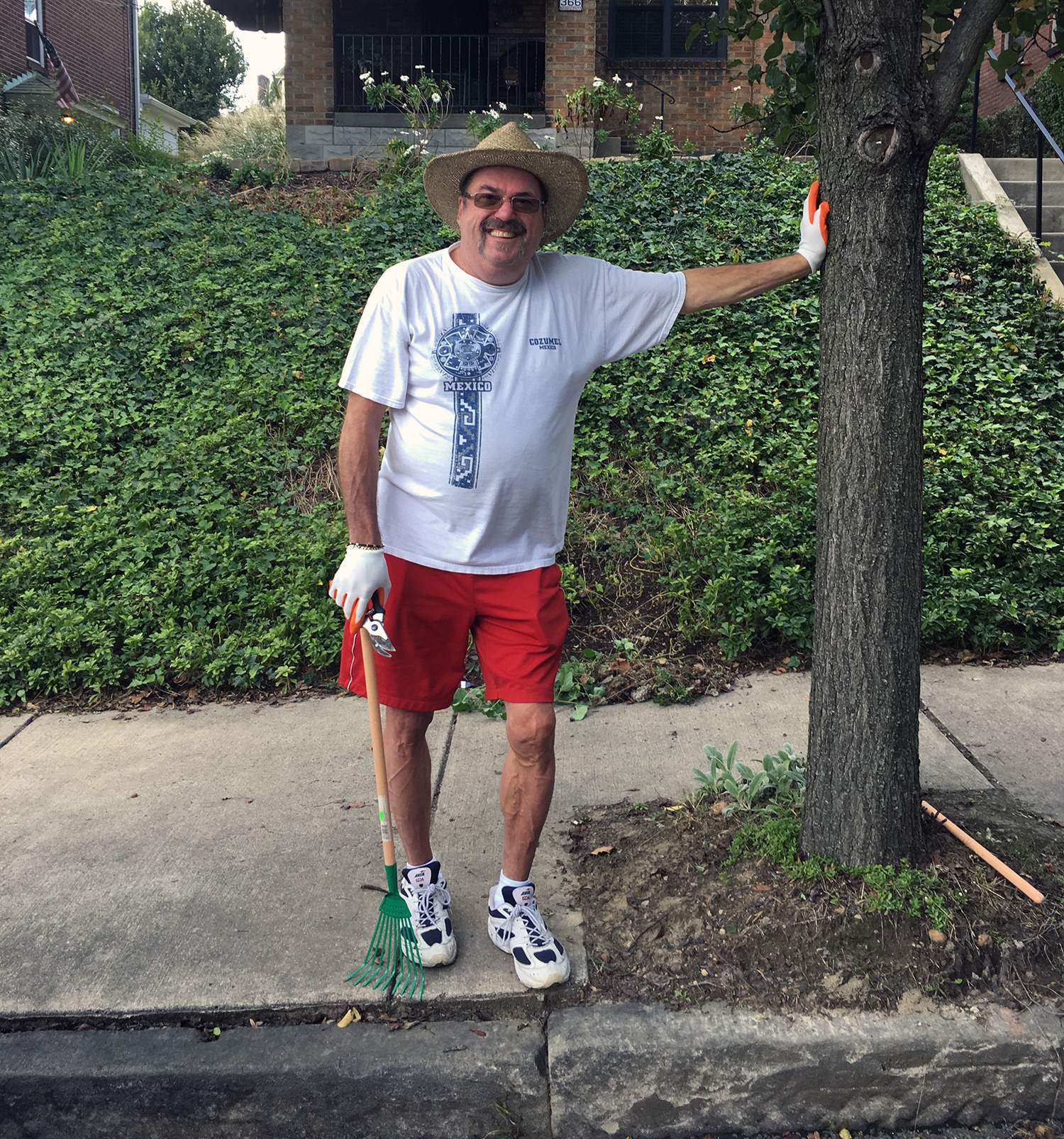
Patrick has lived in Friendship for 29 years. When he moved in, he said the neighborhood was “iffy.”
“There was a question whether Shadyside or Garfield will extend this way. Little by little, it started looking more like Shadyside. Old Victorians that were divvied up into apartments got reclaimed as single family homes.”
People take pride in their homes. Patrick himself was in the midst of weeding the sidewalk in front of his house as he spoke about a recent block party.
“The crowd was diverse: families, single people, we have Mexicans, Afro-Americans, Asians, all living together in peace. My tenants who live on the second floor are from Spain. They are students at Carnegie Mellon University. I learn a lot from them about Spain, Spanish food, traditions.”
Rafael Cardamone

Rafael Cardamone has lived in the Friendship-Bloomfield area for a year. He said he has moved here at an interesting time when diversity, in a way, has been “stripped of its integrity.”
What he’s referring to is the high promises that come with high rises and other development, but ultimately force people out of their homes and their neighborhood.
Rafael said the the neighborhood has still maintained some of its diversity. “There are a lot of people who lived here for three, four generations in the same houses, same family.” And there is hope for increasing diversity in the area. An emerging arts scene in neighboring Garfield is starting to attract diverse residents and amenities.
“Some of it has been here for a long time and some of it is new, which is good,” Rafael said.
Sheraden
Pittsburgh’s third most diverse neighborhood.
Brian, 42

Brian (who didn’t want to give his last name for privacy reasons) has lived in Sheraden for eight years. He said he’s not shocked by the fact that data shows it’s one of the most diverse neighborhoods. “I see the diversity. You have Asians, whites, blacks. I’ve seen Filipinos, we’ve got Cubans.”
He thinks diversity is an important aspect of living in any neighborhood.
“Cities are divided in parts of the country over ethnic backgrounds. For what reason? It shouldn’t be … we’re all the same on the inside.”
Larelle Davis, 24

Larelle, a father of three, has lived in Sheraden for five years and said he’d actually like to see more diversity in his neighborhood because it’d be good for his kids.
He only knows of two white people living on his street. He said everyone else is black. When people see white people in his neighborhood, they think they’re “drug junkies or they’re looking for drugs,” Larelle said.
He said he has gotten pulled over for looking suspicious just when he was riding around in the car with a person of a different race.
Central North Side
Pittsburgh’s fourth most diverse neighborhood.
Staysha Wiggins, cosmetologist

Staysha has lived in the North Side for four years with her 12-year-old son and 4-year-old daughter.
“Since this election season, it’s been a little bit different with the way people act toward each other and some of the stuff that comes out of people’s mouths, but for the most part, the area I live in, there’s not too much negativity or nothing really different.”
Kelly Morrissey, owner of Rasta House on Federal Street

Since Kelly opened the Rasta House a few years ago, he said the North Side is evolving into a go-to place for multicultural foods and that his customers are more diverse than ever.
“When you connect with people from other races and cultures, it creates more value to you, to your life and more understanding of others. It’s a wonderful thing for the business and the community… Diversity to me is everything. It’s power. It’s knowledge and it’s bringing people together from all walks of life.”
Geraldine Muyango, 49, owner of daycare center

Geraldine has lived in the Central North Side for 22 years. She raised 10 children in the neighborhood and owns a business there. She said the community was predominantly black when she moved in and has become more diverse over the years, both racially and with the opportunities available to all of its residents.
Diversity of neighborhood and school, she said, really affects the worldview of children.
“I think it shows them we can be of any color, any race, and that we can still live in the same community and grow and live and educate each other in a better way.”
Spring Garden
Pittsburgh’s fifth most diverse neighborhood.
Ann Trusiak, 74, retired school crossing guard
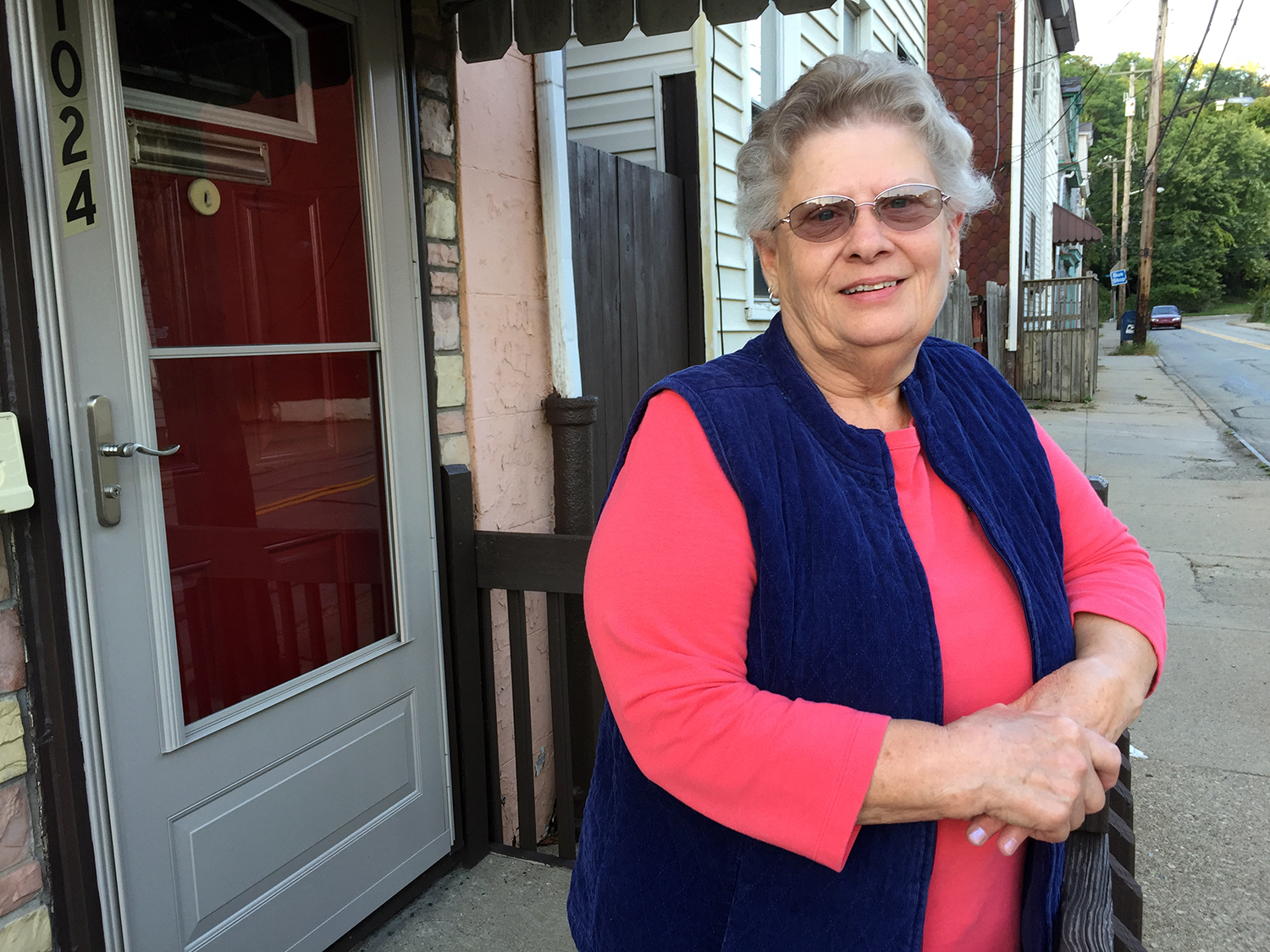
Ann has lived in Spring Garden for more than three decades. As a crossing guard, she saw firsthand how the community changed from an all-white neighborhood to include black and Hispanic families.
She fondly recalls the kids introducing her to games and sayings from their cultures as they waited for the bus.
She does have concerns about people of different races not integrating in her neighborhood. Sometimes there are no problems and everyone is friendly, and sometimes they just want to keep to themselves, she said.
“I’m glad more people are coming into the neighborhood. This is good for all of us. We can learn.”
Allegheny Center
Pittsburgh’s sixth most diverse neighborhood.
Aditya Bennuri, information technology at Highmark

Originally from Chicago, Aditya moved to Allegheny Center in July because it is close to his work.
He thinks the high diversity score that Allegheny Center received is not representative of the neighborhood.
“Most of the people who are living here, if you look at the apartment complexes, you might find Chinese, Asians, Europeans, Americans, etc., but when you cross into East Ohio and toward the Aviary I can find mostly Americans there. Only one spot is occupied by people of other cultures.”
Rakiya Johnson, 11, sixth grade at Pittsburgh CAPA

Rakiya has lived in the Allegheny Commons apartments for most of her life. Its residents are mostly black, but she says she has met and made friends with kids of other races through school. She says it can be a jarring experience but that she likes learning about their cultures.
“I’ve had a couple of doubts, like they wouldn’t like me for my color. When I first met them, I thought that I couldn’t fit in as much because I’m different and then I learned about them, and I thought that being different was cool.”
West Oakland
Pittsburgh’s seventh most diverse neighborhood.
Linda Lewis, 60, food service worker at Pittsburgh Public Schools
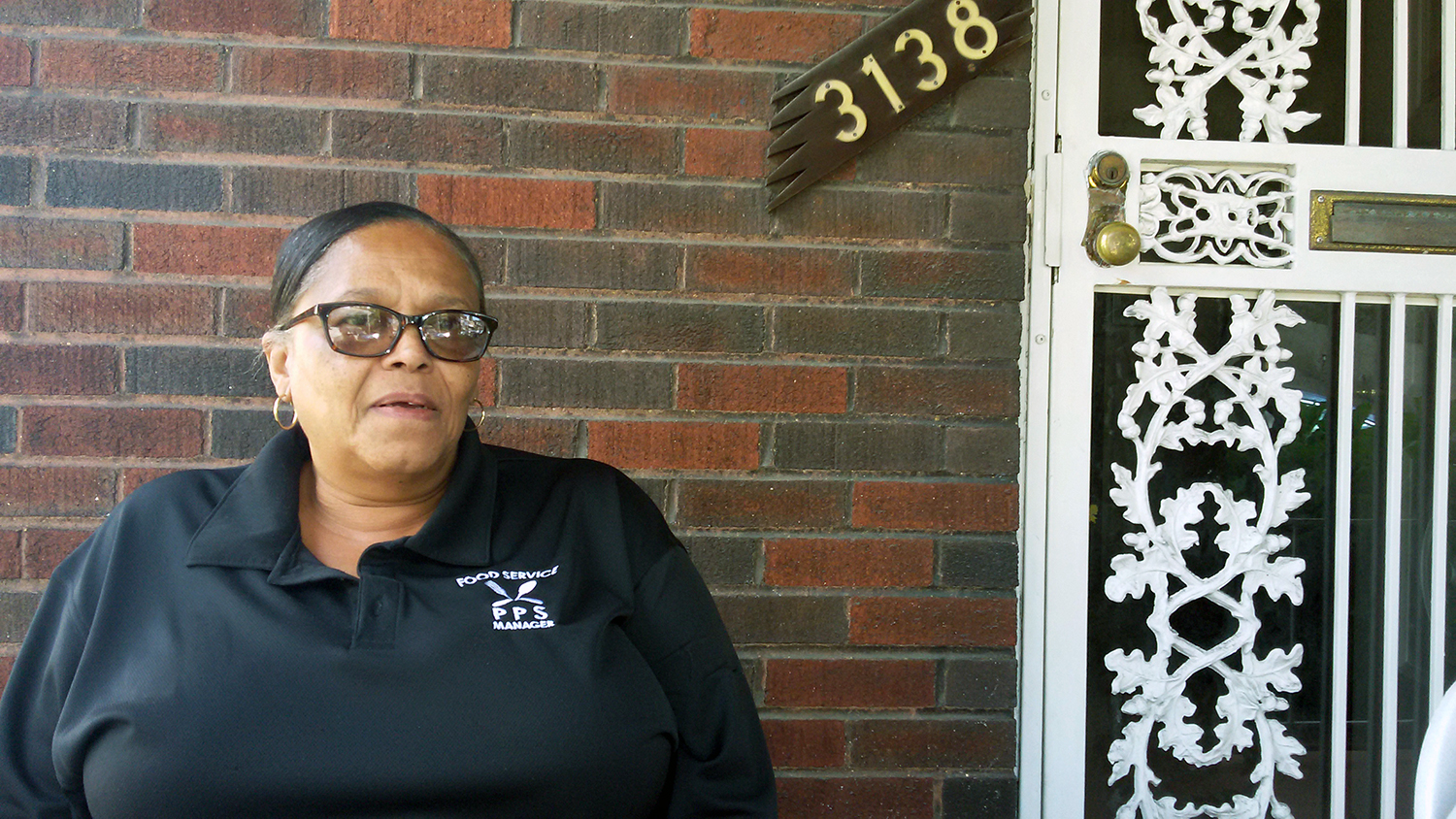
Like Pittsburgh’s other diverse neighborhoods, Linda’s neighborhood is a patchwork of people and stories. Just from what she can see from her porch, West Oakland is a collection of students, retired folk and working-class families.
“I speak to everyone, and most of the people are friendly,” she says. “My sister was just here from California and we were all on the porch and everyone that walked past spoke and she was like, ‘Oh wow, that is so cool,’ because the people in California aren’t that friendly.”
Diane Howard-Coleman, 67, works at The Corner coffee shop
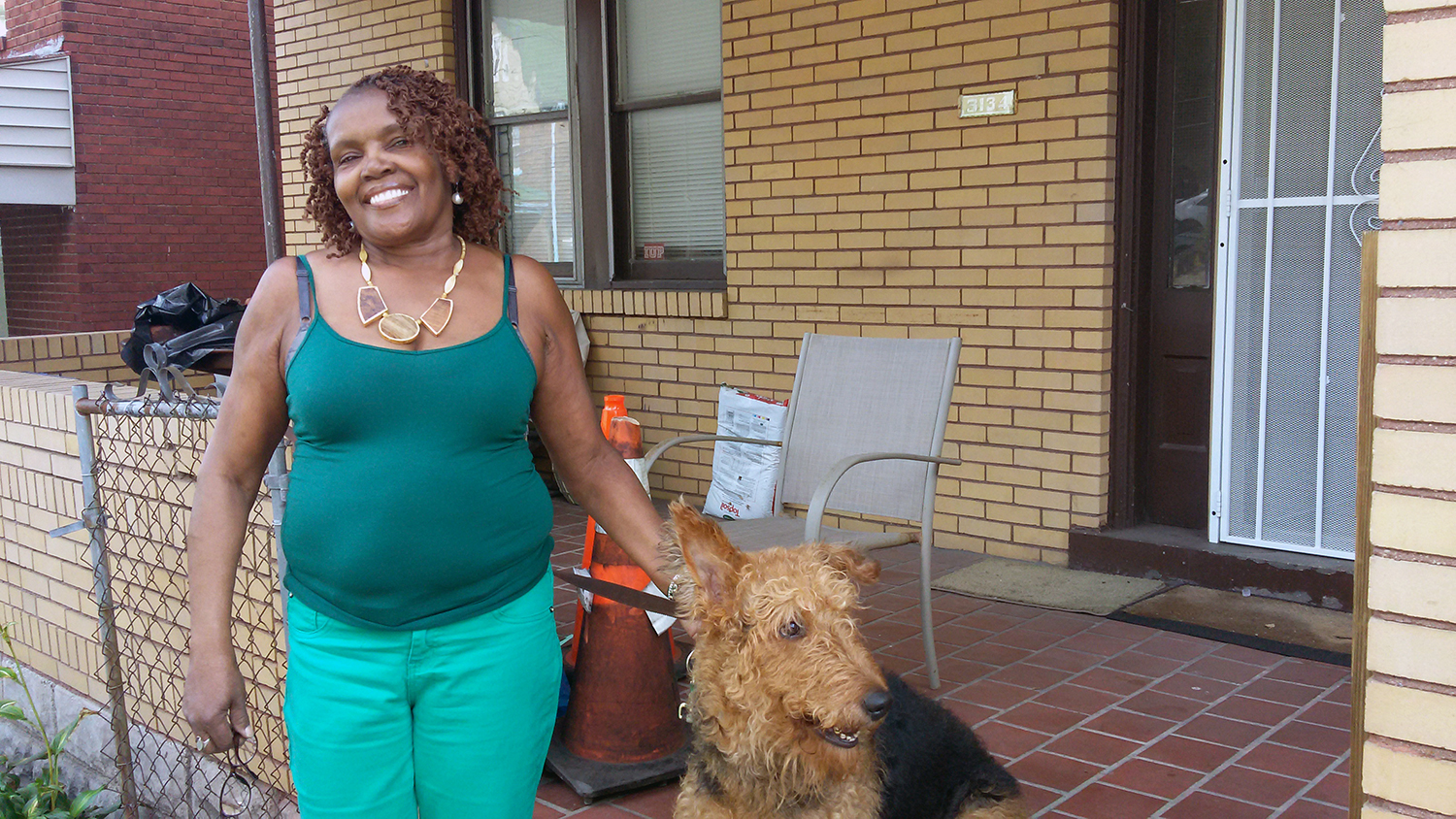
Down the street, at The Corner, a coffee shop with everything from fair-trade beans to a warming shelter for school children during the winter months, Diane Howard-Coleman sees a variety of people each day. The students are her favorite. On the days she works behind the shop’s counter, the students come in and tell her about the dissertations they’re writing or how to celebrate Ramadan or the Chinese New Year.
Coupled with a low crime rate, West Oakland is the perfect home for Diane.
“The diversity? I love it. I get to meet people from different cultures,” she says. “As far as the neighborhood, it’s a neighborhood of different racial backgrounds. I think it’s a good thing because we’re not all grouped into one neighborhood, one race there and one race there.”
Bill Smith, 64, housekeeper at VA hospital

As for Bill Smith, West Oakland is far from perfect, with its “shootouts” and “car chases,” he says, but he likes his neighbors and that the Presbyterian church catty corner from his front door welcomes both black people and white people.
For Bill, West Oakland’s diversity boils down to how he interacts with his neighbors.
“I don’t care what color you are. If you treat me OK, I’m good with it,” he says. “When you start acting up, I don’t care what color you are. It doesn’t matter. A——s come in all colors, you know what I mean? And nice people come in all colors.”
Knoxville
Pittsburgh’s eighth most diverse neighborhood.
Dante Miller, sous chef

Dante Miller, originally from Philadelphia, came to Pittsburgh to study culinary arts at the Arts Institute of Pittsburgh. He recently graduated and moved to a place on Brownsville Road, which borders Knoxville and Mount Oliver.
Diversity is irrelevant when you have to think about survival — at least that’s the perception you get from a conversation with Dante. When asked specifically about diversity, all Dante talked about was violence. The area seems to be more like a war zone. Dante points out the bullet holes in windows of a bar nearby. “A teen got shot over there this summer; by the police station, there were three people who also got shot, including an 11-year-old.
“It’s pretty rough out here,” Dante says. “It doesn’t seem like it. But it is pretty rough out here.”
“There is so much going on out here that you have to mind your own business. I just focus on myself and stay to myself. I am an outsider. I am from Philadelphia; I am an Eagles fan, Flyers fan… I don’t intervene with nothing out here, I just stay to myself.”
Jenyne Carter

Jenyne and her family have lived in the Knoxville-Mount Oliver area for six years, and they love it.
Jenyne says she appreciates interactions with people who do not look like her. As a mother, she thinks that diversity is important “because I think only through knowing people who are not like yourself, do you understand yourself better.”
Asdaq Wyne, salesperson at a store on Brownsville Road

Asdaq has been working in this neighborhood in this cell phone store on Brownsville Road for the past eight months. He has noticed the growing refugee community and said he thinks it is enriching to see how they interact among themselves and with others.
Diversity is important, Asdaq said, “because it brings strength to the society and community: people of different backgrounds, different opinions and thoughts.” But as far as the economic stability, his perception is that the neighborhood is not stable at all.
Based on stories older residents tell Asdaq, the neighborhood used to be more stable in the 1970s. “It’s quite unfortunate actually. When I ask older people, things have definitely changed a lot [in] local politics, the demographics, economically. It could do better, but right now it’s actually pretty bleak. It used to be a cleaner neighborhood at one point… and it has gone downhill. Not sure what the reason is, probably economics, poverty, gentrification. I cannot tell you exactly.”
Bon Air
Pittsburgh’s least diverse neighborhood.
Alex Lazzari, 19, lot attendant at a BMW dealership

Looking to save money on housing, Alex left Fox Chapel last month to move in with a friend in Bon Air. He and others say the neighborhood, which is small and almost all white, is a haven for working-class families. Aside from one man examining the engine of a parked truck and the occasional phone conversation on the way to the T stop, the streets in Bon Air are quiet.
At 19, Alex says he has never really thought about the diversity in his neighborhood, only noticing that his neighbors are friendly. He guesses that all of his neighbors look like him because everyone moved to Bon Air for similar reasons: affordable housing, a short commute to Downtown and a peaceful corner of a bustling city.
Regent Square
Pittsburgh’s second least diverse neighborhood.
Michele Kerr

Michele has lived in Regent Square for 26 years. When asked, “How has the neighborhood changed over the years?” She said, “It hasn’t.”
After we revealed to Michele results of our diversity study and the conclusion that Regent Square is one of the least diverse, we asked if she was surprised. She said, “Yes and no.”
“I find diversity in it. I live next to people that are not exactly like me, and we have shared some cultural differences that I have not been exposed to before. But I guess when I think about it, it is pretty homogenous.”
Bryan Wills

Bryan has lived in Regent Square for four years.
He said he didn’t perceive the lack of diversity in Regent Square as a downside but added that “it’s not necessarily a good thing.” His theory was that it probably has to do more with geography; it’s a bit “far out” and does not offer a lot of options for student housing.
Jane Winekauf

A native of Alberta, Canada, Jan Winekauf has lived in Regent Square for two months. She was surprised to hear that our data showed Regent Square was among the least diverse neighborhoods.
Regent Square, which borders Wilkinsburg, is home to a small theatre, several eclectic shops and restaurants, many of which offer ethnic foods.
Jane has noticed they draw diverse people to the neighborhood even if they don’t live there. “There seems to be a lot of different people of different cultures that come out to the shops down here.” When asked about her perception of economic stability, Jane said she hadn’t lived in Regent Square long enough to know.
Duquesne Heights
Pittsburgh’s third least diverse neighborhood.
Claire Furman, 66

Living in the house her great grandparents built, Claire has lived in Duquesne Heights for 43 years. The neighborhood is a short walk from the Duquesne Incline up Grandview Avenue and is home to some of Pittsburgh’s best city views.
She said she’s not sure why the community landed on the least diverse list, especially because there are quite a few Duquesne students who live here, but she thinks it might have something to do with old German families that planted roots in the neighborhood generations ago.
“I think diversity is always a benefit to any community. If you can live with other cultures and find out about different customs, I think it’s a good idea.”
Spencer Sturgeon, 25

Spencer moved from Mt. Washington to Duquesne Heights about four months ago.
“There’s really not too much diversity. It’s pretty much all white … mostly middle to upper class people.”
He said more diversity could benefit businesses and promote creativity in the neighborhood.
Homewood North
Pittsburgh’s fourth least diverse neighborhood.
Charles Lackey, 67, construction tradesman

Charles was born in Homewood North and has lived here most of his life. He remembers a diverse community, which included Italian neighbors, along with restaurants and stores where residents could buy anything they needed. That starkly changed after the riots in 1968.
“This was a beautiful community. There was big trees — they chopped down all the trees — when you drive down the street, it was like you was driving through a tunnel. Like you’re in England somewhere.
“People lived together. We had a few skirmishes, you know, with the Italians and the different people. But it happened all about ‘68 when the riots jumped off, and they killed Martin Luther. That was the end of it right there.”
He sees a missed opportunity for investment. The neighborhood could be a gold mine, he said, but only if the blocks are revitalized and the young people are provided job training.
Kahlil Morris, 39, community organizer for Operation Better Block

Kahlil has lived in Homewood his entire life and is involved in efforts to restore the community. In his lifetime, it’s been a predominantly black neighborhood and he thinks problems there can be solved by the residents.
“A lot of people feel that by diversifying the neighborhood that things will get a lot better. I just believe that we as African-Americans and people of Homewood-Brushton need to put forward the work to make this a better place.”
To him, diversity means having everything you need in the neighborhood. He looks at Murray Avenue in Squirrel Hill and sees diversity. It sounds like Homewood North had that in what he calls the golden years of the 1960s.
“It’s not about gentrification, or diversifying the neighborhood. I think that us as African-Americans, we need to do it ourselves and Homewood can be restored.”
At Operation Better Block, he works with youth on green infrastructure.
Lincoln Place
Pittsburgh’s fifth least diverse neighborhood.
Dorothy Sheehan, 75

Dorothy has lived in Lincoln Place for six years. The neighborhood sits at the southeastern most edge of Pittsburgh.
She was surprised when she heard it landed on the least diverse list. “I thought it was little bit higher than No. 5” because she sees people from different ethnic backgrounds around the neighborhood. She said diversity is important for a community because it creates a better understanding of other people and “hopefully a little more tolerance.”
*The populations of two Pittsburgh neighborhoods, Chateau and South Shore, were too small for the analysis to be statistically valid. Therefore, the neighborhoods were ranked out of 88 instead of 90.
Introduction and map by Eric Holmberg. Editing of visuals by Natasha Khan and Dale Shoemaker. Videos and photos from the neighborhoods contributed by Khan, Shoemaker, Jeffrey Benzing, Mila Sanina and Halle Stockton.